
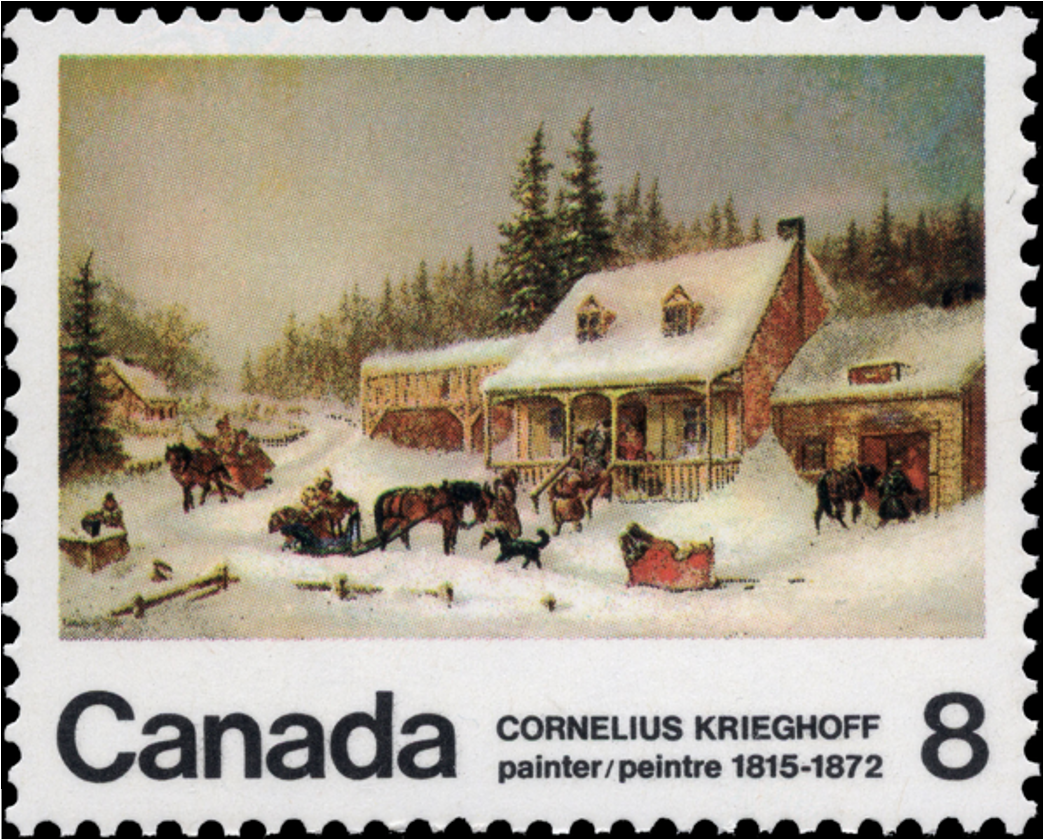
This short story was originally written for the Karen Gansel Short Fiction Contest, inspired by the painting prompt you can see above. After receiving thoughtful feedback from the contest reviewers, I revised the story and am delighted to share it here.
I hope you enjoy reading it as much as I enjoyed writing it.
The Apprentice
Lucas, a blacksmith’s apprentice, arrived early at the shop to start his work, but found the door locked. Puzzled, he knocked and called out:
“Ralph! Are you in there?”
When no answer came, he tried again while rubbing his hands to keep warm.
“Ralph, let me in!”
Ralph was the village blacksmith. Everyone appreciated him because he was always willing to lend a hand.
Young Lucas hadn’t been working with him for very long, yet he had already grown to respect and admire him. Ralph was a tireless worker. As the only blacksmith in Montblanc, he never ran out of work. He was excellent at his craft and always in demand, even from people in neighbouring villages.
He worked alone, and yes, it was a tough trade for one man to handle. It wasn’t until he had an accident after falling off a horse that he realized he needed help. That was when Lucas began working with him as an apprentice, learning the ins and outs of the trade.
“Ralph, come on, open the door, it’s freezing out here!” Lucas insisted, knocking again with no reply.
Shivering, he walked around toward the back door of the building and shouted jokingly,
“Ralph, you lazy old man, it’s late!”
But as he turned the corner, a chill ran straight down his spine and froze him in place.
There, lying on the ground, was Ralph.
His body was stiff, his eyes wide open. His expression was a strange mixture of pain and terror. His nearly frozen body suggested he had been lying there for hours.
Winter was just beginning in Montblanc, a rural village in Quebec, and although the temperature hadn’t dropped too low yet, it was already cold enough to prove fatal for someone exposed to the elements for long.
Lucas stood there, petrified and breathless.
He snapped out of it when a clump of snow slid off the roof of the structure and landed on his head, screaming so loud that the birds perched in the nearby trees scattered into the sky.
“Ralph! Raaalph! Ralph, wake up!” he shouted in angst, shaking the lifeless body of his mentor.
Panicking with fluttering breath, Lucas rushed off to get help, yelling at the top of his lungs as he ran.
“Help! Help! Ralph needs help! Somebody help!”
Several villagers stepped out of their homes to see who was shouting and what had happened to Ralph. When they saw Lucas in such a state, they hurried toward him.
“What’s wrong? Lucas, what happened?” one of them asked.
“Mon Dieu, Lucas, look at yourself! What’s going on?”
“It’s Ralph!” said Lucas, gasping, bent nearly in half with her hands propped on her thighs, completely spent, trying to catch his breath. “He’s lying on the ground. I… I think he’s dead!”
“What?” the villagers cried in unison.
“Where is he?” one asked.
“Behind the smithy,” Lucas answered, still winded.
“Let’s go!”
They all rushed after him.
When they reached the spot, they found the body exactly as Lucas had left it, motionless, stiff, and wearing an expression that made their hair stand on end.
One of the villagers approached out of curiosity, bending down toward him, but as soon as he touched the body, he jerked his hand back as if he had been burned.
“He’s frozen stiff!” he exclaimed, clearly shaken.
“We can’t leave him like this. It’s obvious he’s gone. Someone fetch the doctor,” the other villager said.
Lucas straightened up with effort, his heart pounding, and forced a deep breath before hurrying to find him.
As is typical in winter, dawn breaks later, so the first rays of sunlight were just beginning to appear, and most of the townspeople were still at home. By the time the doctor reached where Ralph was, a large crowd had already gathered.
“Make way, gentlemen, give me some space to examine him,” said the town doctor as he approached the body. Carefully, he touched Ralph’s wrist to check for a pulse, but nothing. Next, he held a mirror to the man’s nose, confirming he wasn’t breathing. He tried to close Ralph’s eyes, but the eyelids were frozen open, so he gently covered them with a handkerchief.
“Gentlemen, I need your help to bring the body inside. I need to examine it carefully to determine the cause of death,” said the doctor in a meditative manner.
At the sound, Lucas, still wired on adrenaline, headed into the blacksmith shop to find a place to put Ralph, wondering what was going to happen to him now that his mentor was dead.
Meanwhile, news of the blacksmith’s sudden death spread like wildfire through the region. The entire village gathered at the smithy, hungry for more information. Some thought it was an accident, others suggested a fight, while some believed he had seen something so horrific it had killed him. Speculation was rife.
Then someone asked:
“And now who shall do Ralph’s work? Who’s going to make our horses’ hooves? Who’s going to build our tools? “
One of them answered,
“Lucas, of course!”
“He’s just a boy, he has no experience,” some muttered, shaking their heads.
“He’s not as strong as Ralph! I don’t think he can do much!” others said.
“There’s no other choice; he’s all we have,” some whispered with resignation.
In the workshop, the doctor and his assistant were examining the corpse exhaustively. Lucas was seated in a corner of the shop above some straw buckets, accompanied by the two villagers who had helped him earlier. He hunched over, looking as if the weight of the world was on his back.
“I’m afraid it’s up to you to take control of the smithy,” one of the men told Lucas.
“Certainly, Lucas, you’re the man! There’s no one else!” the other agreed.
Lucas remained silent, his gaze lost, still unable to believe what was happening. After a while, the doctor turned to him.
“When was the last time you saw Ralph? Do you know if he met up with anyone?”
Lucas stopped tapping his foot and scratched the back of his head as if to refresh his memory, and after a moment he replied:
“We worked late yesterday. When I left, he stayed working.”
“Did you notice anything strange about him? Did he mention if he was feeling unwell? Was he happy, or worried, or tired?” the doctor insisted.
“Well, let’s see. He was tired. Yesterday was a hard day. We worked all through it. He only stepped out for a bit to get his mail,” Lucas said as images of Ralph forging came to mind.
“Now that you mention it, I saw him last night in the tavern sitting alone, as usual, with his mug of beer and reading something,” one of the villagers remarked.
“Any books?” the doctor asked.
“I’d say more like a letter” replied the villager.
“Doctor, look at this” interrupted the doctor’s assistant, a sort of nurse.
“What is it, Anne?” replied the doctor, intrigued.
“This… it looks like a scar,” she said, pointing to a mark on the back of Ralph’s left shoulder. It looked like a burn, but the shape was peculiar, it resembled a flower. The doctor leaned in curiously to inspect the mark, which was indeed a flower: specifically, a fleur-de-lis. Upon seeing it, his expression changed as he recognized the symbol of the authority of the French Crown marked with a hot iron. He simply stated:
“Cause of death: freezing,” then covered the body and left.
Ralph had been a solitary man; no one knew of a wife, children, or parents. Though he was sociable, he had no close friends. He was very private. He had arrived in the village over fifteen years ago. He used to say he was born in Ireland and raised in French Provence. When asked if he had ever fallen in love, he would smile sadly and change the subject. Occasionally, he would smile at a local girl, but it never went further than that.
Ralph loved to draw; it was his favourite pastime. He said he had learned to read thanks to his father, who had also taught him the blacksmith trade. His family had owned a small smithy, but when his father died, his mother had to sell it to pay off debts.
The afternoon before his death, he had received a letter. It hadn’t come from the post office; someone had left it at the tavern with his name on it. That was the letter he was reading while having his beer. He was later seen leaving and heading to the smithy; that was the last time anyone saw him alive. Some claimed they saw something lurking, following him to the workshop, but the darkness of the early sunsets of winter didn’t allow them to perceive what it was clearly.
With the head in his hands in total dejection, Lucas remained in the room alone with his mentor’s body. He couldn’t wrap his head around it. Only a few hours ago, they were in this very spot working hard, and now Ralph lay there, cold and lifeless. He wondered what could have frightened him so much that it left him with such an expression of shock and fear.
“And now, what will we do with the body?” he said aloud, as if expecting an answer.
Lost in thought, he left the shop, leaving the corpse alone.
At the tavern, nearly all the villagers had gathered. The doctor had informed them of the presumed cause of death, and they were debating what to do with the body. In winter, it was impossible to dig into the frozen earth, so he couldn’t be buried until spring. He couldn’t stay in the smithy either; the heat from the forge would hasten decomposition.
“Let’s take him to the chapelle des morts,” said the priest.
“True, it’s the best!” said the doctor.
“I will craft a coffin worthy of Ralph,” the village carpenter said sadly.
The innkeeper served soupe aux pois and beer to those present, and raising a glass, said,
“To Ralph, a good friend!”
“To Ralph!” they all replied in unison, and settled down to take their meal.
Shortly afterwards, Lucas, the doctor and his assistant returned to the blacksmith’s shop to arrange the body.
“We need to change his clothes and clean him up a bit,” the doctor said, then turned to Lucas, “Go to his house and find some clean clothes.”
Lucas raised his eyebrows, widened his eyes and replied startled,
“Go into his house? I’ve never done that!”
“Keep in mind that you are the closest thing to family Ralph had. You’ll have to take care of his things. Now go and bring clean clothes, please,” the doctor instructed with authority.
Reluctantly, Lucas headed to Ralph’s rooms at the back of the shop. He hesitated at the door, completely unsure of what he would find on the other side. With his heart in his mouth, he slowly pushed it open, but a sudden creak made him jump. It was entirely dark inside. He went back for a candle, whose flame crackled restlessly as he stepped across the threshold. Upon entering the room, a shiver raised goosebumps. Without looking around, terrified of what a glance into the shadows might reveal, he snatched a fistful of clothes from the nearest pile and practically ran out.
When he reached the doctor, he realized he had grabbed two pairs of pants.
“We’re missing the shirt,” the doctor noted, showing him the trousers.
“I’m sorry, Doctor, I don’t want to go back in there,” Lucas said still trembling.
Sensing Lucas’s fear, the doctor said:
“Come on, I’ll go with you.”
The doctor took the candle and they went to the room. He looked for a shirt while Lucas waited outside with no intention of going back in there. As he left, he said to Lucas:
“My friend, you have work to do; it’s your turn to take charge of his belongings. But don’t worry, do it during the day; I can see the dark intimidates you. If you need help, just let me know, and I’ll find someone who can lend a hand.”
Lucas was overwhelmed and speechless. He had the feeling that he wasn’t up to the task. Going from being a blacksmith’s assistant to taking care of a dead man’s belongings was too much.
Silently, he helped the doctor and the assistant dress Ralph in his best chemise de bûcheron. A day later, the carpenter brought the coffin to the smithy. It was simple but beautiful, with “Ralph, a good friend” carved into the lid. They placed the body inside; Ralph still wore that expression of fear, his eyes still wide open. They carried him in a procession to the chapelle des morts, where they offered prayers and left him to rest in silence until spring.
As they left the place, Lucas, who felt as if ten years had passed over him, said to himself, “I need a drink!” heading towards the tavern.
Once at the spot, he sat at the bar. The innkeeper came to him, asking,
“What can I get you?”
“A double whisky!” Lucas replied with a sigh.
“Here you go,” the man said, handing the drink to Lucas, and continued “Le coup est dur!”
“Vraiment ¡ très “Dur !” Lucas replied with a haggard expression.
“Listen, I wanted to tell you something that happened the last time Ralph was here,” the innkeeper whispered, leaning in as if to share a secret. “I didn’t want to say it in front of the others to avoid causing more alarm.”
“I’m listening,” Lucas said intrigued, as he took a slow sip of his drink, tasting it as if it were the last time.
“I remember that Ralph came in as usual for dinner and sat in his regular seat,” the innkeeper began. “That day, the stagecoach had arrived with mail and passengers travelling to nearby towns. The tavern was full, and one of them, who seemed to be travelling alone, sat right here at the bar where you are now. He ordered a beer. Looking around as he drank, he nearly choked when he saw Ralph sitting there eating. His expression changed instantly, from relaxed to a mix of surprise and rage. ‘Who is that man in the corner?’ he asked me. I told him it was Ralph, the village blacksmith. The man quickly pulled a paper from his pocket, scribbled a note, and asked me to deliver it. Then he paid and left. I don’t read very well, so I didn’t know what it said. When I gave it to Ralph, I knew it wasn’t good; he became visibly surprised, left his food unfinished, and walked out. That was the last time I saw him alive.”
Lucas listened intently, barely blinking.
“Who was that man? Had you seen him before? What did he look like? Tell me what you remember,” he urged anxiously.
“He was an older man, maybe older than Ralph,” the innkeeper continued. “He could have been his father, but we know Ralph lost his father as a child. He spoke like the southerners do, from the south of France, near Spain. He had a severe character. When he spoke to me, it was with a tone of command rather than a request. Not a very pleasant person, really. But what struck me most was that a couple of days after what happened to Ralph, when the stagecoach passed through on its return trip, the man appeared again and asked why the blacksmith’s shop was closed. When I told him what happened, he seemed astonished and hurried out of town, boarding the coach to continue his journey.”
Lucas was perplexed. Obviously, this man’s appearance was linked to Ralph’s death.
“So, it seems he didn’t know what had happened to Ralph, right?” Lucas asked.
“I imagine not, but he definitely knew Ralph. Maybe a relative he didn’t get along with, who knows!” the innkeeper replied. “You’ll have to find out, Lucas. Maybe you’ll find answers when you go through his things.”
“I’ll have to what?” Lucas exclaimed in shock, giving a start.
“It’s your duty to take care of his belongings, since there’s no family to do it. The sooner, the better. Plus, you’re the only one who can reopen the smithy, and you know how important that is to us. The village needs you now more than ever!”
Lucas was exhausted; he needed to refresh his mind. He thanked the innkeeper and left the tavern.
He wandered through the village, lost in thought. It had snowed, and the streets were covered in a white blanket. Entering his room, he told himself as he closed the door,
“I’m going to rest. Qui vivra verra!“
Lucas was a sensitive soul. Since childhood, he had perceived visions, signs, and sounds invisible to others. His abilities had grown after being adopted by the Weskarini clan of the Algonquin, the original inhabitants of the region, after he was orphaned. He grew up surrounded by animals and nature.
His destiny changed the day he accompanied his adoptive father to Ralph’s shop to repair a sled. Stepping into the smithy for the first time, he was fascinated. Watching Ralph transform a piece of iron into something useful, he told his father he wanted to learn how to do that magic. Seeing such interest, his father spoke with Ralph, who was recovering from his fall, and Ralph agreed to take him on as an apprentice.
In the following weeks, Lucas focused on reopening the smithy. He worked “behind closed doors,” practicing what Ralph had taught him. His mentor had been training him in making horseshoes and adapting them for winter. This was his main challenge, as it was what customers needed most. He also crafted axes, knives, and fire pokers to have ready for the villagers. In just a few days, he went from a passive apprentice to a skilled artisan.
His commitment to the community sustained him in moments of weakness. He was a young man forced by life to assume adult responsibilities without a choice. No one else in Montblanc or the nearby towns was qualified to provide blacksmithing services. Lucas knew the value and commitment each person had to their community. These values were integrated into his soul thanks to his life within the clan. So, despite his own desires, he responsibly embraced his new role.
The blacksmith’s shop reopened after the Christmas holidays. Enthusiastic villagers rushed to visit and place their first orders. Lucas was everywhere, attending to customers, taking orders, and above all, thanking them for their patience and support.
However, there was something he had tried to ignore, in spite of the continuous signs he’d been perceiving inside the workshop. Things moving on their own, fleeting glimpses, shadows. But most of all, noises from inside Ralph’s living rooms, as if he were still there. No one had gone back inside. Lucas didn’t want to. But he knew he couldn’t avoid it forever.
A few days later Lucas had an unexpected visitor. His adoptive father appeared at the blacksmith’s shop, bringing his sled and his old horse, the one Lucas used to ride when he lived with the clan.
“Father, I’m so happy to see you!” Lucas shouted, approaching him with a wide smile and his arms extended to give him a big hug.
“How are you, Luc? Look at you, you’re a man now!” the man replied with a broad smile.
“Look how old you’ve gotten!” Lucas teased the horse while removing the saddle, and the horse snorted in protest.
“His hooves are cracked, and the sled is broken. That’s my excuse to come visit you,” the father said paternally. “Where is your mentor?”
“My mentor is gone,” Lucas replied with a sorrowful expression. “But I’ll tell you everything. Fixing the sled will take some time, so I beg you, please stay with me for a few days. I need the company of you both!” he added pleadingly.
His father, surprised and intrigued, nodded immediately.
“As I was coming in, I saw a storm approaching. If you want, you tend to Rouge while I’ll go buy some supplies before the whole village hunkers down,” the father said.
“Of course, father, be careful. I’ll take care of Rogue,” Lucas said enthusiastically, happy to have his two closest ones with him, at least for a while.
The father left, leaving Lucas with his old horse.
He grabbed a stool and brought it closer to the horse to check its hooves. He was happy to have it with him. Humming a song the horse liked, he sat on the stool, stroked his friend, and said aloud:
“Well, Rouge, let’s see what’s going on with those hooves!”
“What’s going on is that I have callouses!” Lucas heard the horse say.
Lucas and his horse communicated in their own way. They had developed a strong bond and understood each other perfectly.
“The old Indian won’t leave me alone,” Rouge continued grumbling. “He’s got me going back and forth pulling that sled that weighs as much as an obese demon! My hooves disintegrated on the road! I’m going to have to break a leg to see if he gets someone else. I’m old, just like you said.”
At listened Lucas let out a loud laugh, he missed these chats with his ever-grumpy old friend. He wiped his eyes with his forearm to dry the tears of laughter, and then said aloud,
“Calm down, calm down, grumpy foal! Show me those callouses you’re talking about.”
He began to examine the foreleg closely. After a few minutes, the horse jumped and became restless.
Lucas quickly grabbed Rouge by the saddle and tried to keep him still.
“What’s wrong, Rouge?” Lucas asked, worried.
“There’s someone here. I just saw something,” the horse said concerned.
“Yes, I know. Don’t worry, it won’t hurt us,” Lucas said, trying to reassure the horse. “You’ll be staying here for a few days, so don’t be afraid.”
“What?” the horse snorted in astonishment. “I won’t stay here alone! Remember, I’m nervous. Find me somewhere else where I’ll have company.”
“Well, I’ll see what I can do,” Lucas said, understanding his friend’s nervousness. He stroked his back, saying, “I wouldn’t want to stay here alone at night either.”
As night fell, Lucas’s father returned. Knowing they would be staying for several days, he had found a place for the horse. So the three of them took shelter from the storm, leaving the blacksmith shop behind.
At home, they caught up. Lucas told his father everything: why he was now in charge of the only blacksmith shop in the area, what he felt in the shop, and how Rouge had been scared.
“From what you say, that soul has something to tell you and won’t be able to rest until it says it,” said the father. “Don’t worry, I will help you. I will stay until you have resolved this matter.”
Almost crying with emotion, Lucas told his father while hugging him,
“Will you? Thank you, Father! You have no idea what a relief that is!”
Although he has been overcoming all the challenges, Lucas needed to feel the support of his family. In the end, he went from teenager to young adult in just a few weeks.
After a while, father and son prepared to rest and wait for the storm to pass.
Days passed, and Lucas’s father kept his promise. When the storm subsided and they could return to the blacksmith shop, they decided it was time to go into the deceased man’s house. Lucas didn’t want to, but deep down he knew he couldn’t avoid it forever, so they both headed to Ralph’s home. The father prayed at the door before entering. Inside, the atmosphere was heavy and dark, and it smelled stale and musty. The father quickly opened the windows to let in some fresh air. They noticed that there was very little furniture, very little stuff in general.
“The deceased is here,” the father said suddenly.
“I feel the chills,” Lucas replied. He was shivering and began rubbing his arms for warmth.
“He’s here because he wants us to find something,” the father continued. “So, let’s look for that ‘something’.”
They both began gathering things and sorting them. Clothes in one pile, utensils in another, and drawings, many drawings, in another.
“He drew well!” the father noted. “He was quite an artist.”
“Vraiment! And look, he has several drawings of the same woman’s face,” Lucas replied, extending his arm to show him a bundle of papers.
“Let me see them. Meanwhile, keep looking,” the father instructed.
Just then, they heard a noise inside the room and rushed to see where it came from. The thud repeated, and they noticed it was coming from a trunk hidden under the bed. Pulling the trunk out, they saw it was locked.
“Mon Dieu!” Lucas exclaimed, astonished.
At that moment, they heard a metallic clink of something falling right beside them.
“Fallen straight from heaven!” the father exclaimed, seeing it was a key.
They quickly opened the trunk and found it filled with newspapers, yellowed with age.
“Well,” the father said, “I think we found what the deceased wanted. Let’s look through these papers.”
As they spread them out, they found photos of Ralph in several publications. He looked much younger. There was also the photo of the woman from Ralph’s drawings. The story in the papers chronicled a series of tragic events. Ralph, born of humble means in Ireland and raised in French Provence, had fallen in love with the daughter of a wealthy military officer. From birth, the girl had been promised in marriage to the son of a higher-ranking officer. But when she grew up, she met Ralph, they fell in love, and they married in secret. When her father found out, he accused Ralph of kidnapping and theft, using all his influence to have him convicted. Ralph served several years of hard labour and was then exiled, forbidden from ever returning to France. A letter found among the papers from France said his pregnant wife had given birth in a convent, dying during childbirth. Ralph never knew what became of his daughter.
“Mon Dieu, what a story!” the father exclaimed with a surprising expression.
“I can’t believe it!” Lucas said, shaking his head, thunderstruck.
They remained lost in thought for a long time, absorbing what they had discovered. It was a sadly dramatic story of a man who never gave a single sign of what had happened. Finally, with care and respect, they gathered everything and left the room, but not before offering prayers for the peace of the deceased.
When the storm fully ceased and the roads were passable, Lucas’s father and his horse departed for their land. Meanwhile, a calmer Lucas gathered the villagers and told them what he and his father had discovered. There wasn’t a single soul unmoved by Ralph’s story. Many wept. The innkeeper, seeing the newspapers Lucas showed, recognized the mysterious man who had left the note. He was the father of Ralph’s late wife, the cause of his misfortune.
In the weeks that followed, the blacksmith shop became more vibrant every day. The strange phenomena in the store had stopped. Lucas never heard or saw anything unusual again.
Spring arrived, bringing the colours and bird songs to the town. It was time to bury Ralph’s body. When everything was ready, the priest announced the day of the burial so everyone could attend.
The day before the funeral, Lucas was working busily at the shop. He was hunched over the anvil, lost in the steady, deafening noise of his hammer shaping a horseshoe into shape when a young woman, who had just arrived on the mail stagecoach, came into the smithy, looking for Ralph. Lucas thought she came from the nearby town and maybe needed a smith’s work, so he put the tools aside and approached her; however, her face looked familiar, as if he had seen her before, though he never had.
Intrigued, while wiping sweat from his forehead with the back of his sleeve, he asked what brought her there and why she was looking for Ralph, to which the young woman replied:
“He is my father, “showing him a locket around her neck containing photos of Ralph and his wife, the face from the drawings he was found in Ralph’s home.
Lucas went from a tired face to one of surprise, and upon seeing him, the young woman felt that something was wrong.
He looked around, looking for a comfortable place in the smithy to sit, but there wasn’t enough space and everything was dirty. Then he decided it was best to go to Ralph’s house.
Trying to be as kind and warm as possible, he invited her to go to his father’s house. The young woman wondered what it was about, doubtful and curious, she followed him, hoping to meet her father.
“May I offer you a cup of tea or something else, mademoiselle?” he asked softly, showing her a seat.
“Je vais bien, merci, just tell me when I can meet my father.” She responded without taking her eyes off Lucas’s face.
“Well, mademoiselle,” Lucas began as he sat down in front of her and continued, “I’m afraid I have some sad news to tell you”…
Lucas used the sweetest and gentlest tone to explain all the events that occurred around his father. They sat for hours in that place. Lucas showed her the things he found in the trunk, photographs, answered any questions she asked, and tried to comfort her.
The girl cried bitterly and could hardly believe what had happened to her father.
The next day was Ralph’s funeral. The whole village, hearing of the daughter’s arrival, was deeply touched and crowded to accompany her in her grief. Ralph’s resting place was ready, and they headed to the chapelle des morts to collect the coffin. Since it was essentially a freezer, the body remained incorrupt.
At the daughter’s request, the priest allowed the coffin to be opened so she could see her father for the first and last time.
The lid was removed, and there lay Ralph, looking just as he had when he was placed in. The same expression, the same wide-open eyes. The villagers left the daughter alone with her father for a few moments. The young lady was drowning in sorrow and spent some minutes leaning over her father’s coffin, talking to him.
When it was time to close the casket and proceed with the burial, something incredible happened. Ralph’s face had transformed from an expression of fear into a smile of peace. The daughter placed her hand over her father’s eyes and gently closed them, kissing him on the cheek.
By sunset, Ralph finally rested in peace.
In the following days, the two young people spent time together, supporting each other and forging an increasingly close bond.
As the months passed, the young woman made the village her new home. She and Lucas took over the forge, transforming it into a training centre for the next generation of blacksmiths.
With the arrival of winter, the entire village gathered to celebrate their marriage in the blacksmith shop, which was renamed La Forge de Ralph.
E.T.